
Applied Behavior Analysis (ABA)
Applied Behavior Analysis is considered the most effective research- and evidence-based treatment for autism and is supported by decades of empirical research. ABA treatment focuses on addressing socially significant behaviors for a client, with interventions aimed at increasing skills in communication and socialization and reducing maladaptive behaviors or those that may impede learning.
At i2ABA, our individualized intervention plans prioritize socially significant areas of deficit to improve communication, social skills, and play skills, and strive to address barriers to learning. We focus on FERBS (functionally equivalent replacement behavior skills) to teach a more appropriate alternative to challenging behaviors.
Our intensive intervention sessions include a combination of:
- Teaching skills in simple and structured ways using DTT (Discrete Trial Teaching)
- Building teachable moments into everyday activities and within play using NET (Natural Environment Teaching)
- Exposure to social skills opportunities to teach foundation readiness skills in small group settings in a specially designed Social Skills Groups
Discrete Trial Training (DTT)
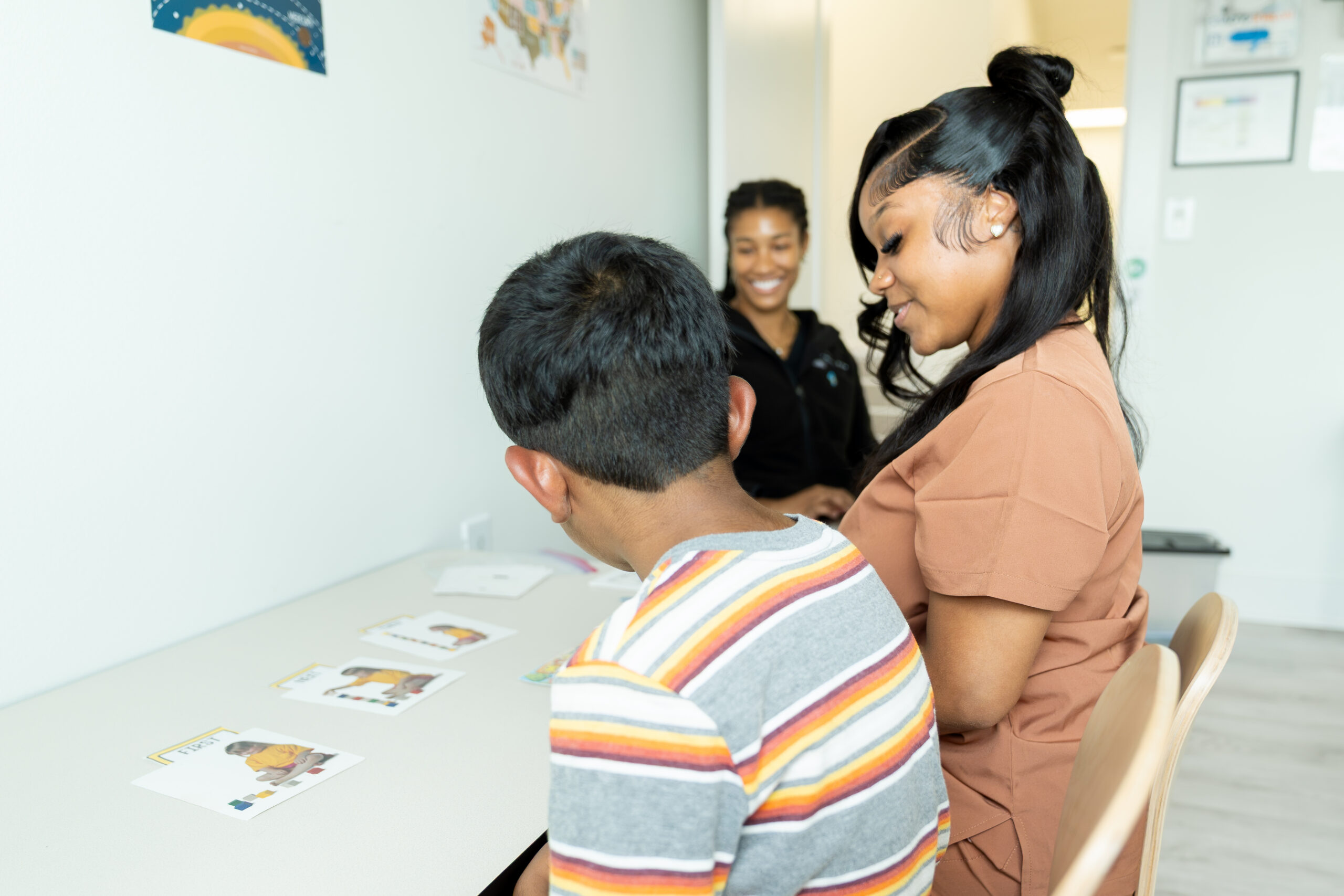
Discrete Trial Training is one technique that is utilized in sessions that follows a clear, predictable and repetitive format for each skill, often called a discrete trial. This is an evidence-based approach that supports the client’s need for structured teaching and/or several repetitions to learn new skills using prompting and prompt fading. The familiarity and consistency help learners develop skills through positive reinforcement. This includes data collection that provides information to support mastery of skills or to evaluate whether skills should be taught differently, as a BCBA evaluates this regularly to make modifications as needed.
Natural Environment Teaching (NET)
Natural Environment Teaching is another approach within ABA that embeds learning opportunities in a play- and social- based format that is engaging and motivating. Several areas within the clinic setting are purposefully designed to encourage learning and social interaction during pretend play, cooperative play, gross and fine motor play, music, sensory play, and reading. This method allows the child to learn skills across different settings and situations, using different materials, engaging in new activities to enhance engagement with their technicians and peers. Skills development also works through choice-making, denied access, waiting, turn-taking, and sharing.
Motor Skills Development
Gross Motor Skills
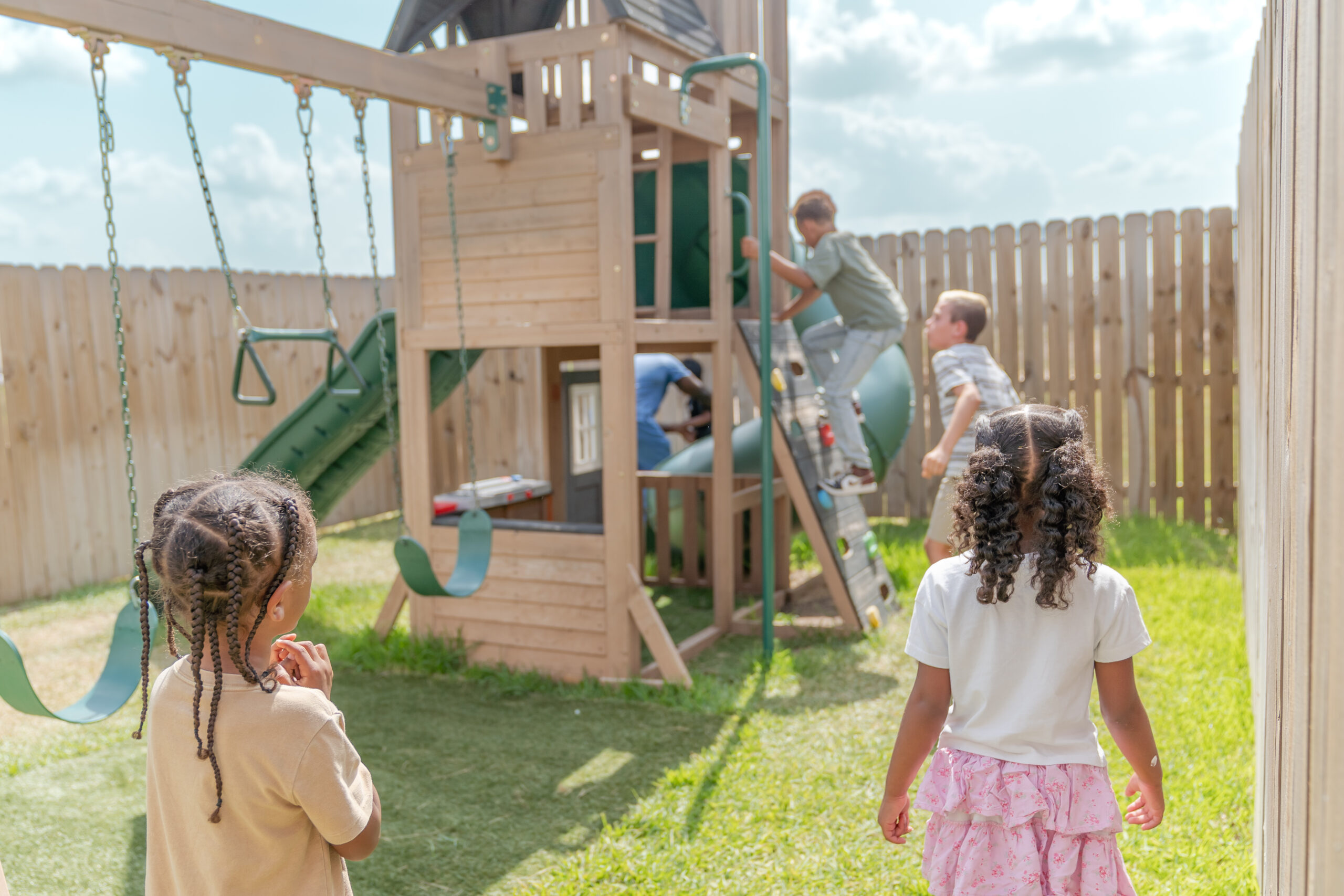
Gross motor skills involve the coordination of large muscle groups and are essential for tasks such as walking, running, jumping, sitting, and dancing. The inclusiveness of gross motor skills ensures that a child not only learns essential motor skills but also develops the accompanying social and communication skills needed to interact effectively in various settings and with peers. At the clinic, we have dedicated indoor and outdoor spaces for gross motor development and a structured dance curriculum to incorporate these developmental skills into ABA therapy sessions. We also incorporate safety skills and peer social interaction within gross motor activities.
Fine Motor Skills
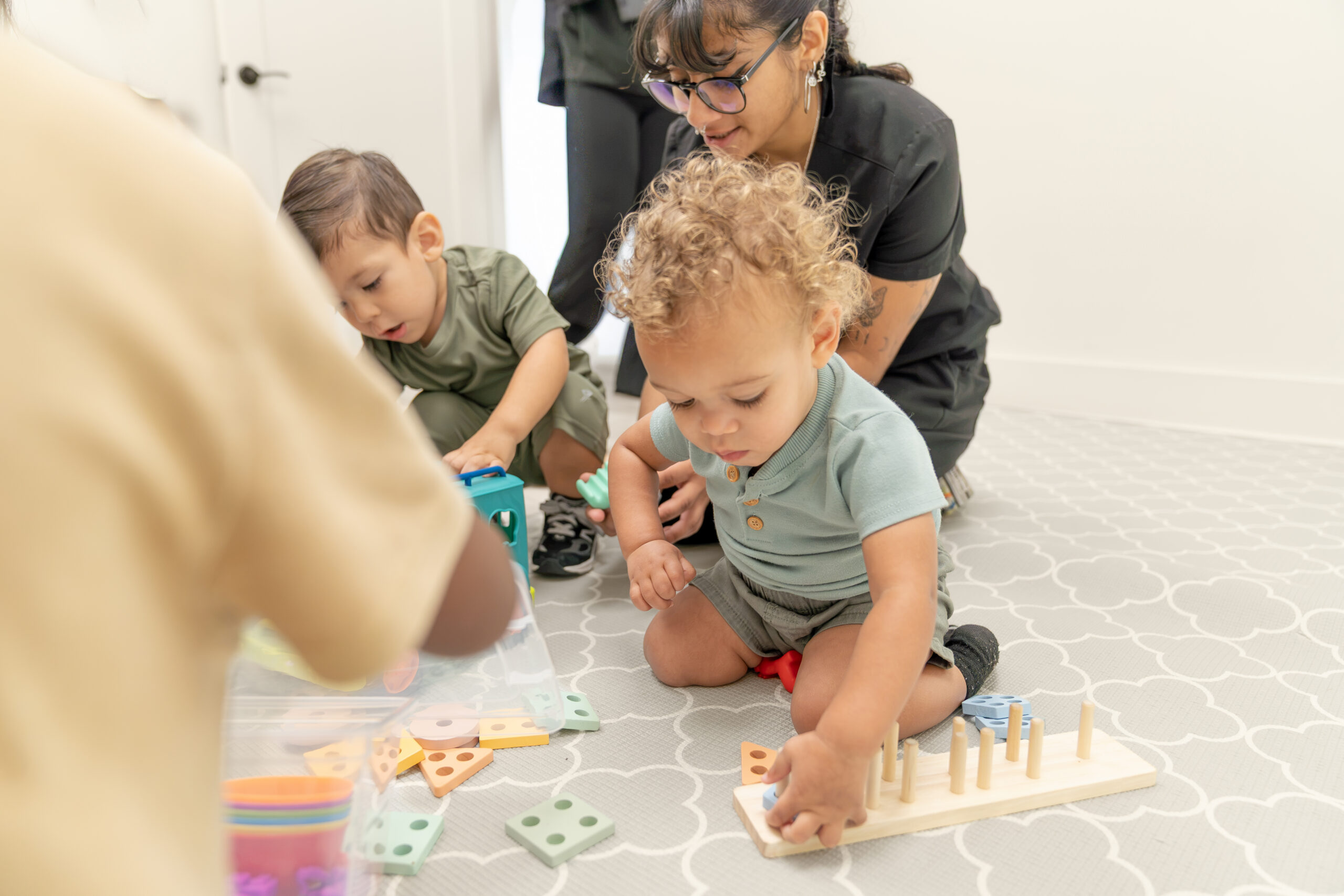
Fine Motor skills refer to the abilities that involve using the hands and fingers to complete activities. It is essential to help support the development of these skills to work on picking up small objects, pre-writing and coloring skills, using scissors, utensils to eat, opening containers, etc. We evaluate if adaptive equipment or tools are needed to help support greater independence. If a child also has Occupational Therapy services, we collaborate with providers to ensure continuity in skills development.
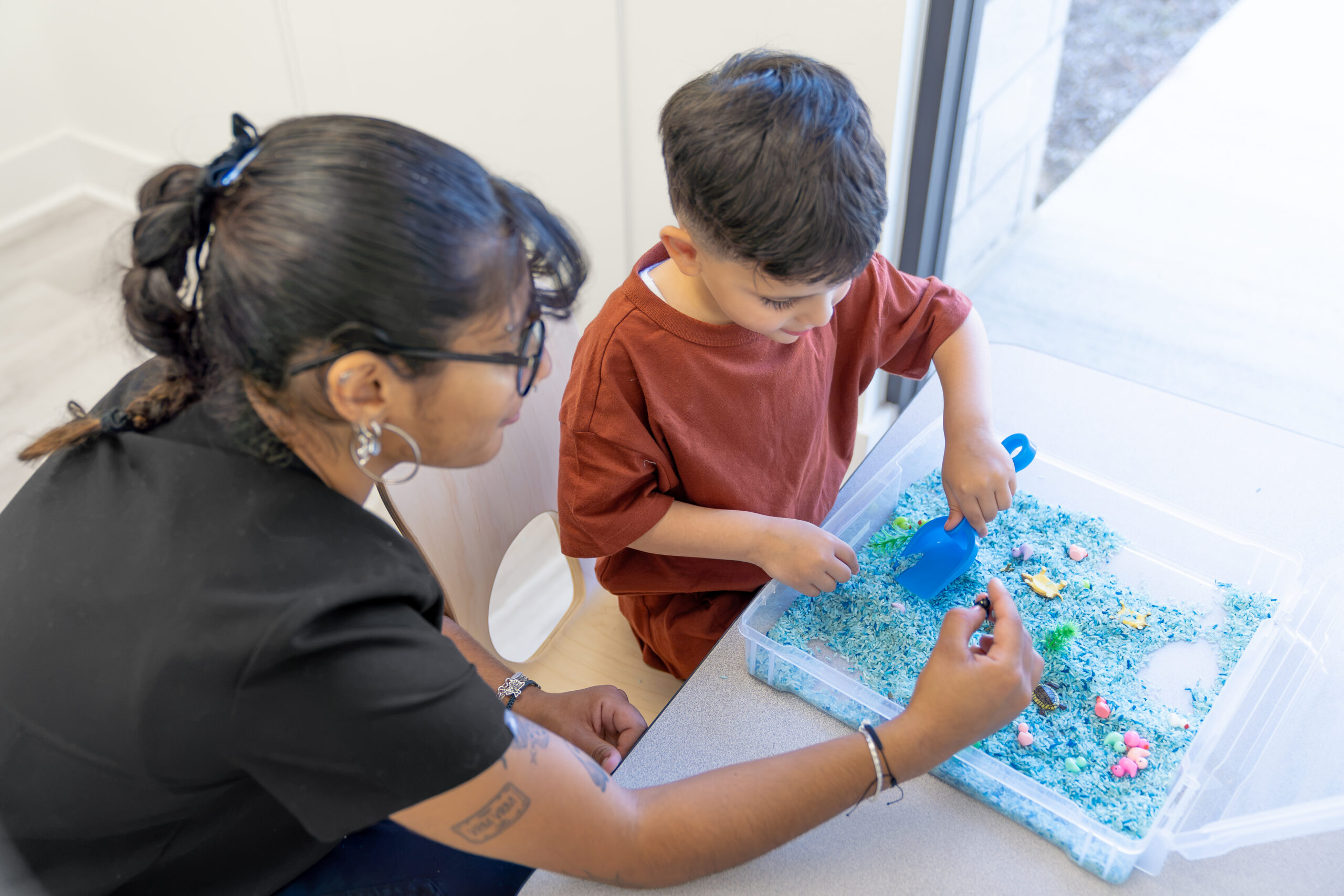
Sensory Skills
Sensory opportunities are built into our daily schedule to help a child experience different sights, sounds, and textures. Our goal is to increase toleration to new experiences that may seem uncomfortable, but to provide a safe gradual experience. Clients also have access to needed items like weighted blankets, stimulating toys/fidgets, noise cancelling headphones, spinners, etc.

Parent Training
At the onset of treatment, we highly recommend the continuous involvement and learning for our parents/caregivers. We aim to equip them with knowledge and skills to support their child’s development to support improvements in communication, behavior reduction and social skills.The parents along with the BCBA select goals to work on together and meet regularly to collaborate and learn. We offer support to parents and the child to train across settings such as doctor or dentist visits, getting a haircut, facilitating peer play, grocery store or the home setting.